
The end of the experimental era: what true transformation in due diligence looks like
At this year’s Xapien Connect 2026, one message came through loud and clear: AI enables business transformation. For the last few years, organizations have been focused on AI experimentation. Pilot projects. Proofs of concept. Internal debates about what AI might mean for compliance, risk, procurement, due diligence, and investigations.
That era is ending.
The organizations leading the conversation today are asking a different question: “How do we redesign due diligence around capabilities that already exist?”
Rather than viewing AI as another tool to bolt onto legacy processes, speakers throughout the event explored what true transformation looks like: rethinking how organizations identify risk, where human expertise is applied, and how better intelligence leads to better decisions.
Turning the lights on
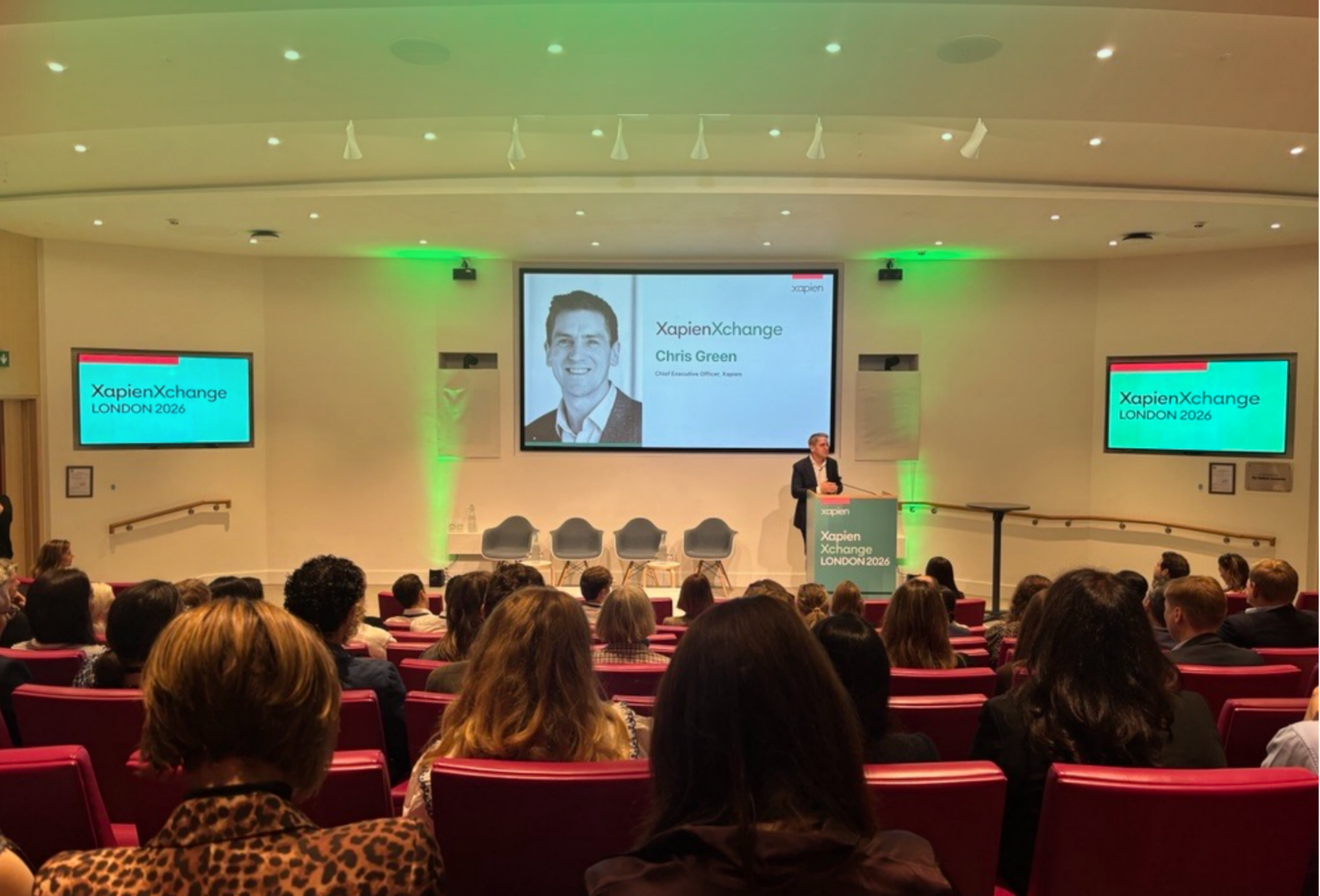
Chris Green, CEO of Xapien, set the tone early by challenging the audience to think beyond incremental improvements.
“Counterparty due diligence was a slow and scarce resource, like candle light, we’ve got used to living in the dark in regard to counter parties, investors etc.
Let’s bring the light in to all the business relationships, from suppliers, doners to customers, and set a new standard for counterparty risk using AI. AI can truly impact and transform business for due diligence, rather than just being easier and cheaper and faster.
It’s worth asking yourself, what does transformation mean for your business? Imagine having full transparency of all your relationships, you could say yes to new business faster and with more confidence, enter markets you might have judged too opaque before, move beyond routine cases.
What is the transformation you are on the cusp of fueled by technology?”
Chris Green, CEO, Xapien
Traditional due diligence has often been constrained by resources. Teams have had to make decisions based on limited visibility, manual research, questionnaires, and periodic reviews. The reality is that it has never been possible to investigate every relationship with the same level of rigor.
That approach made sense in a world where information was difficult to find, it makes less sense when information is abundant.
Moving from information gathering to risk understanding
One of the strongest themes throughout the day was that organizations do not have an information problem, they have an interpretation problem.
For years, due diligence programs have focused on gathering more data:
- More reports
- More questionnaires
- More screening results
- More documentation
But more information does not automatically create better decisions. In fact, excessive information can obscure rather than clarify risk. The value lies in understanding what matters, what requires action, and what decision-makers need to know.
As one panelist noted:
“The challenge isn’t access to information. The challenge is knowing what’s material.”
This shift has significant implications for risk and compliance teams. Success should not be measured by the volume of reports produced or checks completed. It should be measured by whether organizations can identify risks sooner, make decisions faster, and allocate resources more effectively.

Stop treating every relationship the same
Another recurring point was proportionality. Historically, many organizations have been forced into a one-size-fits-all approach to due diligence. Limited resources meant applying broadly similar processes across large populations of third parties, regardless of their actual risk profile.
But risk is not equally distributed.
A low-risk supplier should not require the same level of effort as a politically exposed individual, a high-profile donor, a complex ownership structure, or a third party operating in a higher-risk jurisdiction. Technology is making more thorough investigations possible at scale, but that does not mean every entity requires the same level of scrutiny.
Instead, organizations are increasingly focusing on:
- Prioritizing attention where risk is highest
- Applying enhanced due diligence where it is genuinely needed
- Reducing unnecessary friction for lower-risk relationships
- Using continuous monitoring to identify material changes
This is particularly important given the growing impact third-party risks can have on organizations. Research from Deloitte found that 17% of organizations had experienced a high-impact third-party risk incident in the preceding 3 years, with many reporting significant financial, operational, and reputational consequences.
Technology should expand human expertise, not replace it
Despite the focus on AI throughout the event, one thing was remarkably consistent: nobody was arguing for removing humans from the process. Speaker after speaker highlighted the importance of ensuring that technology creates more space for human judgment, not less.
Technology is increasingly capable of:
- Discovering information
- Connecting entities and relationships
- Monitoring changes
- Surfacing potential concerns
- Accelerating research
Humans remain responsible for:
- Applying context
- Making decisions
- Determining proportionality
- Managing stakeholders
- Escalating concerns
- Exercising judgment
The organizations seeing the greatest value from AI are not simply automating tasks. They are fundamentally changing where skilled professionals spend their time.
As GRC Strategy Director, Paul Cadwallader stated on the panel:
“We’re now becoming interpreters of information rather than just collectors. AI enables users to connect more dots.”
Paul Cadwallader, GRC Strategy Director, CoreStream GRC
The most successful organizations are redesigning processes
One of the most thought-provoking discussions focused on a deceptively simple question: If these capabilities existed when you designed your due diligence process, would you build it the same way today?
For many the answer is probably… no.
Legacy due diligence processes were designed around constraints:
- Limited capacity
- Expensive research
- Fragmented information
- Manual investigation
Those constraints shaped workflows that many organizations still follow today.
But when information can be gathered, analyzed, and monitored far more efficiently, it creates an opportunity to rethink the process itself.
The most forward-thinking organizations are no longer asking: “How can we use AI inside our current process?”
They’re asking: “What should the process look like now?”
The most compelling part of the event was seeing how these ideas are already being applied.
Helping charity teams focus on the donors that matter most
Charities face a unique challenge. They need to balance donor experience with appropriate due diligence, often while operating with limited resources and small compliance teams. Several examples highlighted how organizations are moving away from treating every donor identically and toward a more risk-based approach.
By identifying which relationships require deeper review, teams can focus their expertise where concerns genuinely exist, while reducing unnecessary bottlenecks for lower-risk donors. The result is better risk management without creating friction that could delay or discourage philanthropic support.
“Water Aid ensures doners are ethical and not impact to brand, Xapien has freed up time to enable the team to become more strategic advisors and build relationships with the other stakeholders. We can now scan the list of people and spot the ones to focus, while letting others continue to build relationship and not lose the philanthropist.”
Christina (Chrissie) Dodkin, the Global Ethical Standards Manager, Water Aid
The strongest use cases were not about completing due diligence faster. They were about introducing due diligence earlier. Having visibility sooner allows organizations to identify concerns before relationships are established, before transactions progress, and before resources are committed. In this model, due diligence becomes less of a compliance checkpoint and more of a strategic decision-support capability.
The future isn’t faster due diligence. It’s better due diligence.
If there was a single lesson from Xapien Connect, it was this: True transformation is not about accelerating existing processes, it’s about rethinking them.
The organizations making the greatest progress are moving beyond experimentation and embracing a new model for due diligence. One that combines technology-driven intelligence with human expertise. One that prioritizes risk rather than process. And one that enables teams to focus on the decisions that matter most.
The future of due diligence is not more data, but better judgment.
About the CoreStream GRC and Xapien partnership
Many of the themes discussed at XapienXchange London, including risk-based due diligence, continuous monitoring, and better use of human expertise, reflect the challenges organizations face every day. Through their partnership, CoreStream GRC and Xapien help organizations embed due diligence and third-party intelligence into broader governance, risk, and compliance processes, supporting a more proactive and informed approach to managing organizational risk.
Frequently asked questions
Due diligence is the process of gathering and assessing information about an individual, organization, supplier, customer, donor, or partner to identify potential legal, financial, reputational, regulatory, or operational risks before entering into or continuing a relationship.
Third-party risk management (TPRM) is the practice of identifying, assessing, monitoring, and mitigating risks associated with external parties, such as suppliers, vendors, contractors, partners, and service providers. Effective TPRM helps organizations make informed decisions throughout the lifecycle of a relationship.
Due diligence is typically a component of third-party risk management. Due diligence focuses on understanding a third party’s background, ownership, reputation, and risk profile, while third-party risk management encompasses the broader processes used to assess, monitor, and manage risk throughout the relationship.
Many organizations have historically relied on point-in-time assessments conducted during onboarding or periodic reviews. However, risks can change rapidly due to ownership changes, sanctions, regulatory developments, adverse media, cyber incidents, or geopolitical events. As a result, organizations are increasingly adopting continuous monitoring and ongoing risk assessment approaches.
Risk-based due diligence is an approach that applies different levels of scrutiny depending on the level of risk presented by a relationship. Rather than treating every supplier, donor, customer, or partner identically, organizations focus additional resources on higher-risk entities while streamlining reviews for lower-risk relationships.
Enhanced due diligence (EDD) is a more comprehensive level of investigation used when a relationship presents elevated risk. This may include deeper reviews of ownership structures, adverse media, sanctions exposure, politically exposed persons (PEPs), source of wealth, regulatory history, or reputational concerns.
AI can help organizations analyze large volumes of information, identify risk indicators, surface connections between entities, and monitor changes more efficiently. This allows risk and compliance professionals to spend less time gathering information and more time assessing risks, investigating concerns, and supporting decision-making.
No. While AI can automate research and monitoring activities, human expertise remains essential for interpreting information, applying context, making decisions, engaging stakeholders, and determining appropriate actions. AI is most effective when used to support, rather than replace, professional judgment.
Continuous due diligence is the ongoing monitoring of third parties after onboarding. Instead of relying solely on annual or periodic reviews, organizations maintain visibility into changing risk profiles and can respond more quickly when significant developments occur.
Donor due diligence helps charities and nonprofits identify potential reputational, regulatory, or financial risks associated with donations and fundraising relationships. A risk-based approach enables organizations to focus resources on higher-risk cases while minimizing unnecessary delays for lower-risk donors.
Continuous monitoring can help organizations:
Identify emerging risks sooner
Respond more quickly to significant changes
Improve regulatory compliance
Reduce reliance on periodic reviews
Strengthen decision-making
Increase confidence in third-party relationships
Organizations can improve due diligence by adopting a risk-based approach, prioritizing higher-risk relationships, integrating due diligence into broader risk management processes, leveraging technology to improve visibility, and ensuring human expertise is focused on investigation, analysis, and decision-making rather than administrative tasks.