
Author: Corey
-
UK Corporate Governance Code
Read more: UK Corporate Governance CodeWhat is the UK Corporate Governance Code? The UK Corporate Governance Code is the Financial Reporting Council’s corporate governance framework for listed companies in the UK. It sets out principles and provisions covering board leadership, company purpose, division of responsibilities, board composition, succession, evaluation, audit, risk, internal control, and remuneration. The Financial Reporting Council explains…
-
AI governance
Read more: AI governanceWhat is AI governance? AI governance is the system an organization uses to direct, oversee, control, and evidence the way artificial intelligence is developed, bought, deployed, monitored, and used. It covers who can approve AI use, what risks need to be assessed, what data can be used, how outputs are reviewed, how decisions are documented,…
-

The EU delayed its AI Act deadline: what the Digital Omnibus means for AI governance everywhere
Read more: The EU delayed its AI Act deadline: what the Digital Omnibus means for AI governance everywhereKey takeaways Introduction: the AI compliance deadline GRC teams have been racing toward just moved For eighteen months, “2 August 2026” has been a fixed point on the calendar for compliance, risk and AI governance teams across Europe, and well beyond. This was the date the EU AI Act’s toughest obligations, covering high-risk AI systems, were due to bite: conformity assessments, technical…
-
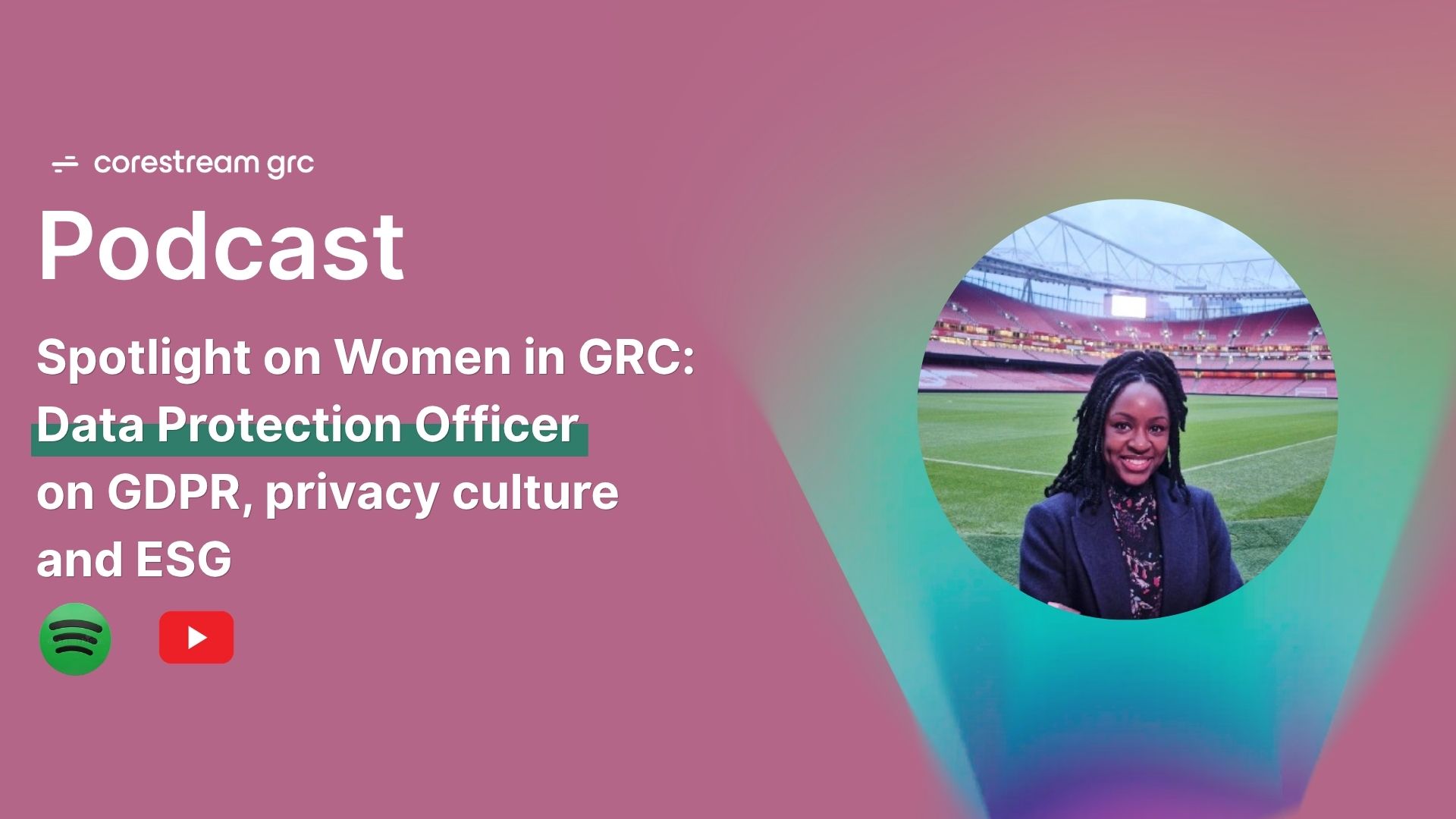
Spotlight on Women in GRC: DPO on GDPR, privacy culture and ESG
Read more: Spotlight on Women in GRC: DPO on GDPR, privacy culture and ESGIn this episode of CoreStream GRC’s Spotlight on Women in GRC podcast, Lucy Montague sits down with the series’ first DPO, Lorraine Pinter, to discuss her journey from law into privacy, the evolution of GDPR, building confidence as a leader, and why data protection remains one of the most impactful and personally relevant areas of GRC. The DPO’s podcast episode explores: Starting your…
-

The future of GRC: what principles-based regulation means for GRC teams
Read more: The future of GRC: what principles-based regulation means for GRC teamsKey takeaways Introduction: the GRC rulebook is getting smaller, as accountability grows Ask any compliance officer what’s changed in their job over the last two years, and few will point to a single new regulation. They will point to something harder to pin down: a growing expectation that they explain and defend their own judgment, rather than simply follow a rule written by someone…
-
Board governance
Read more: Board governanceWhat is board governance? Board governance is the way a board of directors directs, oversees, and holds an organization accountable. It covers how the board sets strategic direction, challenges management, monitors performance, oversees risk and internal controls, and makes decisions in the interests of the organization and its stakeholders. In governance, risk, and compliance (GRC), board governance…
-
Board oversight
Read more: Board oversightWhat is board oversight? Board oversight is the process through which a board of directors monitors, challenges, and holds an organization’s leadership accountable. It helps directors understand whether strategy is being delivered, risks are being managed, controls are operating effectively, and issues are being escalated and resolved. In governance, risk, and compliance (GRC), board oversight matters because directors cannot…
-
Governance roles and responsibilities
Read more: Governance roles and responsibilitiesWhat are governance roles and responsibilities? Governance roles and responsibilities define who makes decisions, who provides oversight, who owns risk, who manages controls, who monitors compliance, and who must act when issues arise. They explain how authority, accountability, escalation, and reporting work across an organization. In practice, this means knowing who approves what, who owns…
-
Board reporting
Read more: Board reportingWhat is board reporting? Board reporting is the process of giving a board of directors the information it needs to oversee an organization, challenge management, and make informed decisions. It brings together relevant updates on strategy, performance, risk, controls, compliance, audit, issues, and actions. In governance, risk, and compliance (GRC), board reporting matters because directors…
-
Governance and compliance
Read more: Governance and complianceWhat is governance and compliance? Governance and compliance describes the relationship between how an organization is directed and controlled, and how it meets the obligations that apply to its activities. Governance sets direction, decision-making structures, accountability, oversight, and reporting. Compliance helps ensure the organization meets legal, regulatory, contractual, policy, and ethical requirements. In governance, risk,…