How top banks transformed risk and compliance chaos into control with CoreStream GRC

For many banks, risk and compliance do not fail loudly. They fail quietly.
On paper, governance looks strong. Frameworks exist. Policies are approved. Controls are documented. But day to day, teams are working around systems that were never designed to keep pace with regulatory volume, organizational scale, or constant change.
That is where control starts to slip.
Case Study 1: How a UK bank achieved integrated GRC at scale with CoreStream GRC
- Industry: Retail and commercial banking
- Operating footprint: UK-based with international regulatory exposure
- Legal entities: Multiple regulated entities across the group
One UK retail and commercial banking group believed it had reasonable GRC coverage. Risk, compliance, and regulatory change were all being managed. Just not together.
DUPLICATION OF EFFORTS
Risk teams maintained detailed registers. Compliance teams tracked obligations elsewhere. Regulatory updates arrived daily and were handled differently across teams. Evidence existed, but it was duplicated. Reporting required manual reconciliation across systems that were never designed to work together.
Confidence in management information was mixed. Senior leaders could not always be certain whether reported status reflected reality or delay.
This is a familiar pattern in banks, particularly those growing quickly or operating across multiple jurisdictions.
“Global financial services firms are dealing with hundreds of regulatory change events every business day, coming from regulators across the world.”
Michael Rasmussen, GRC analyst and pundit from GRC 20/20.
ACHIEVING INTEGRATED GRC
When this bank moved onto CoreStream GRC, the first change was not a new control or policy. It was structural.
Risk, compliance, policy, regulatory change, and actions were brought onto a single shared data model. Obligations, risks, policies, and evidence were created once and referenced everywhere.
The impact was immediate:
- Teams stopped re-interpreting the same regulatory obligation.
- Evidence stopped being recreated for different audiences.
- Management information stopped lagging behind reality.
This was not about efficiency for its own sake. It was about restoring control.
“People tend to focus on the efficiency dimension but often that’s the least of the three. Saving maybe 40% from automating processes might be great, but there’s a much bigger impact when you design your GRC project around the outcomes the organization is aiming to achieve.”
Paul Cadwallader, GRC Strategy Director, CoreStream GRC
Want to hear more from Paul Cadwallader?
Why do disconnected GRC systems fail at banking scale?
Banks do not struggle with risk and compliance because they lack frameworks. Most already have them.
They struggle because their systems were never designed to work as one.
This pressure is not theoretical. Industry research shows just how much regulation now dominates senior leadership attention. A survey by the Bank Policy Institute found that around 42% of C-suite time and 43% of board time in banks is now devoted to regulatory compliance and supervision, while the share of bank IT budgets spent on compliance has risen steadily over recent years.
When that level of effort is absorbed by fragmented systems and manual coordination, control becomes harder to sustain, not easier.
As banks grow, regulation multiplies, teams fragment, and accountability blurs. Risk sits in one system. Compliance in another. Regulatory change lives in inboxes. Reporting becomes an exercise in reconciliation rather than insight.
“Just because you make connections between existing silos doesn’t remove the silos. It allows for connectivity, but you often end up with the same situation, but marginally better or even worse than before.”
Lionel Matsuya, Head of Client Solution Design, CoreStream GRC
Most GRC platforms claim to be integrated. In reality, they are collections of loosely connected modules. Data is duplicated. Ownership is unclear. Management information reflects the past, not the present.
This is the point where control becomes fragile.
What changes when banks use a truly connected GRC platform?
CoreStream GRC was designed around a shared data model that runs across:
- Enterprise Risk Management
- Compliance Management
- Policy Management
- Regulatory Change Management
- Action Tracking
Risks, obligations, policies, actions, controls, and evidence are created once, in a central platform, and referenced wherever they are needed.
For banks, this changes how GRC works day to day.
The same regulatory obligation no longer needs to be interpreted separately by risk, compliance, and audit. Evidence gathered for compliance does not need to be rebuilt for audit or regulatory reviews. When regulation changes, the impacted risks, policies, and controls surface automatically.
Management information is always current because it is drawn from live activity, not stitched together at month end.
This is why connected GRC matters. It replaces reconciliation with clarity.
Case study 2: How a global bank achieved traceable, defensible regulatory change management with CoreStream GRC.
- Industry: Financial services and insurance market
- Operating footprint: Global insurance and reinsurance market
- Legal entities: Multiple regulated entities and market participants
MANUAL TIME-CONSUMING WORK
Another banking group operating across multiple regulators relied on manual monitoring of regulatory updates. Some changes were logged. Others lived in inboxes. Follow-up happened through email.
For financial institutions, regulatory change is constant. The problem is not volume.
The problem is traceability.
Banks are not just asked what changed. They are asked:
- Who reviewed it?
- Who owns it?
- What was impacted?
- What actions were taken?
- Where is the evidence?
For this bank, the answers existed, but not in one place.
ACHIEVING A SINGLE SOURCE OF TRUTH
Using Regulatory Change Management within CoreStream GRC, regulatory updates were identified centrally and triaged once. Ownership was assigned at regulatory area level. Impact assessments were routed through workflow to risk, compliance, and legal teams.
Where changes mattered, they were directly linked to affected risks, policies, and actions.
Over time, regulatory change stopped being reactive. When regulators asked questions, the bank could show a clear, defensible chain from update to decision to action, without manual effort.
The pressure did not disappear. The uncertainty did.
That distinction matters. In heavily regulated financial institutions, regulation will always be demanding. What effective GRC changes is whether that pressure translates into confusion, rework, and risk exposure.
As defined by OCEG, governance, risk, and compliance exists to “reliably achieve objectives, address uncertainty, and act with integrity.”
That is exactly what changed for this bank. Regulatory updates were no longer tracked in fragments or reconstructed after the fact. Each change could be traced clearly from update, to ownership, to decision, to action, with evidence available when it was needed.
This is what defensible regulatory change looks like in practice. Not less regulation, but less uncertainty about how it is being managed.

What happens when risk registers are not connected to live controls and actions?
Risk frameworks are often mature. Risk registers are not.
One banking group we worked with had a well-established ERM framework, but risk registers were static. Actions, controls, and policy changes were tracked elsewhere. Leadership struggled to see where exposure was increasing or where controls were failing.
After centralizing risk within CoreStream GRC, risks were directly linked to controls, actions, policies, and regulatory obligations. Ownership was assigned at individual level. Escalation followed severity, not manual judgement.
When an action stalled, it was visible against the risk it was meant to mitigate. When a control failed, its impact on exposure was immediately clear.
Risk discussions shifted from retrospective reporting to live management.
How does replacing spreadsheets improve compliance management in banks?
Compliance teams usually feel the strain first.
In one financial services institution, compliance work had become dominated by manual tracking. Multiple versions of the same information existed. Audits triggered last-minute scrambles for evidence.
By bringing compliance obligations, tasks, and evidence into CoreStream GRC, actions were created automatically from audits and regulatory change. Workflow enforced reviews and deadlines. Evidence was captured once and reused.
Missed deadlines dropped. Audits focused less on finding information and more on outcomes.
Compliance became visible and measurable, rather than inferred.
See how CoreStream GRC supports resilient risk and compliance.
How can banks build resilient control across risk and compliance?
Across these banks, the lesson was consistent.
Control did not come from more documentation or more tools. It came from connection, ownership, and visibility.
By embedding workflow and action tracking across risk, compliance, regulatory change, and policy, CoreStream GRC removed reliance on memory and email. Accountability became visible. Deadlines were enforced by the system.
As one risk leader we worked with put it;
“For the first time, we have a single source of truth. We can clearly see what needs to be done, who owns it, and what’s been completed, all in one place.”
– Risk and Assurance Leader, Financial Services (anonymous)
At leadership level, dashboards replaced uncertainty with clarity. Executives could see live status across the organization and drill into detail when needed.
Why do banks choose CoreStream GRC for risk and compliance management?
Banks operate in environments where gaps are not tolerated.
They need systems that scale without breaking, enforce accountability without bureaucracy, and provide evidence without reconstruction. All while aligning to their unique ways of working.
By bringing Enterprise Risk Management, Compliance Management, Regulatory Change Management, Policy Management and Action Tracking onto one shared data model, CoreStream GRC becomes the foundation for how risk and compliance actually work.
Not another tool. Control that holds under pressure.
If you’d like to book a workshop with the expert team who have helped a variety of financial organizations, click here.
Read our re-insurance case study here.
FAQ on GRC for banks and financial institutions
CoreStream GRC supports banks by centralizing regulatory change, risk, compliance, and evidence across entities and jurisdictions. Regulatory updates are triaged once, ownership is assigned at the right level, and impacts flow automatically across risk, policy, and action tracking. This allows banks to scale without rebuilding processes for each regulator.
In banking, GRC refers to how institutions govern decisions, manage risk, and demonstrate compliance across regulators and legal entities. GRC breaks down at scale when these activities are managed in disconnected tools. As regulatory volume increases, fragmented systems create duplication, unclear ownership, delayed reporting, and reduced confidence in management information.
CoreStream GRC was designed specifically to address this breakdown by bringing risk, compliance, regulatory change, policy, and actions onto one shared data model that scales with regulatory complexity.
Most banks already have mature frameworks. The issue is execution. When risk registers, compliance obligations, regulatory updates, and controls sit in separate systems or inboxes, teams spend more time reconciling information than managing exposure.
CoreStream GRC removes this fragmentation by connecting risk, compliance, and regulatory change at data level, not through bolt-on integrations. This ensures teams work from the same source of truth, not parallel versions of it.
With CoreStream GRC, regulatory updates are identified centrally and triaged once. Ownership is assigned at regulatory area level, and impact assessments flow automatically to risk, compliance, and legal teams.
Where changes matter, they are directly linked to affected risks, policies, controls, and actions. This creates a clear, defensible chain from regulatory update to decision to action, with evidence available when regulators ask for it.
No. Integrated GRC does not reduce regulatory pressure. It reduces uncertainty. Regulation remains demanding, but banks gain clarity, traceability, and confidence in how obligations are being managed. The result is defensible control, not less oversight.
Replacing spreadsheets with workflow-driven compliance management removes reliance on memory, email, and manual chasing. Actions are assigned automatically, deadlines are enforced by the system, and evidence is captured once and reused. This reduces missed deadlines, shortens audit preparation, and shifts compliance from reactive reporting to continuous oversight.
Continue the insights
-
From risk management to business outcomes: what Gartner’s GRC insights mean for risk leaders
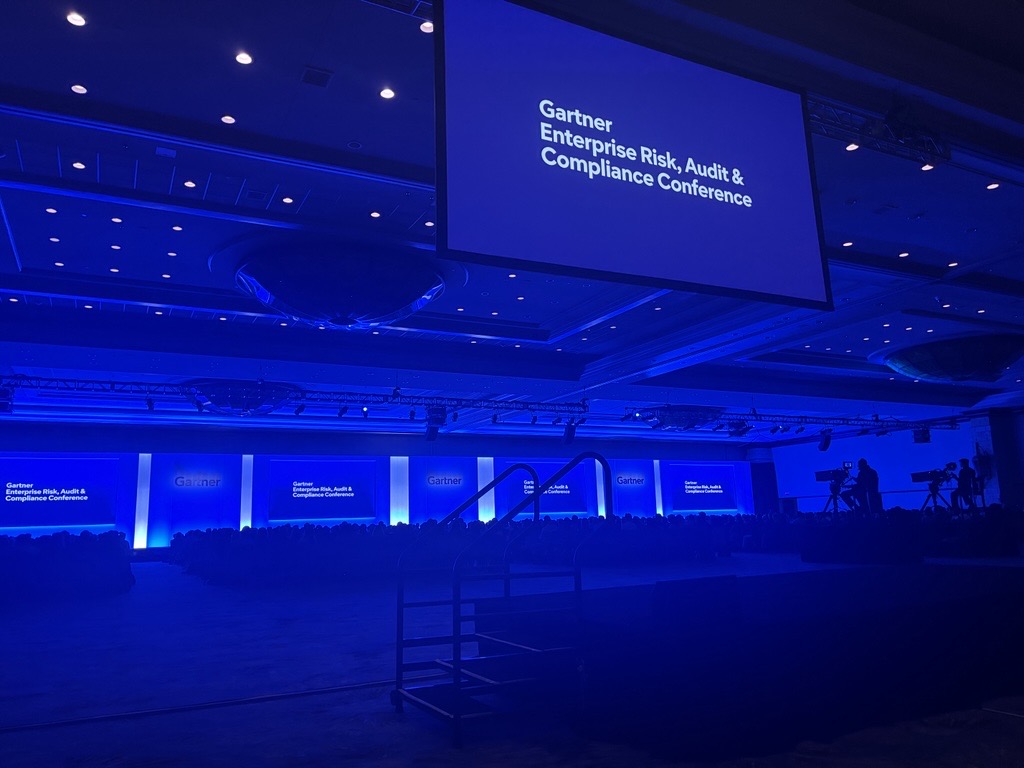
Risk leaders do not need more information. They need more of the right context. That was one of the clearest themes we took from the 2026, North American, Gartner’s Enterprise Risk, Audit and Compliance Conference. Across sessions the conversation repeatedly came back to a bigger question: how can GRC help organizations make better decisions and…
-

The future of risk, cybersecurity, and due diligence: Key insights from CoreStream GRC’s upcoming industry panels
If there is one theme that has emerged from CoreStream GRC’s news and insights coverage throughout 2026, it’s this: Risk is becoming more interconnected, more technology-driven, and more business-critical than ever before. As preparations begin for Risk Expo Europe 2026 and XapienXchange London 2026, many of the questions dominating boardrooms today are the same issues CoreStream GRC has been tracking throughout the year: The result…
-
CoreStream GRC shortlisted for Best Use of AI in GRC, and together with SANNOS for Technology Innovation in GRC at the #RISK Awards 2026
London, 9th September 2026 – CoreStream GRC, in partnership with SANNOS AI, is proud to announce that it has been shortlisted for the Technology Innovation in GRC: SME category at the RISK Awards 2026, recognizing innovative solutions that are transforming how Governance, Risk & Compliance is delivered. Recognition for innovation in modern GRC “Innovation isn’t defined by the size of an organization, it’s defined by how effectively new ideas are turned into…