

Conflict of Interest: sample questions to start the conversation
Sample prompts from CoreStream GRC to support transparent, ethical governance.
Disclaimer: This guide provides sample questions and considerations for discussion only. It is not an exhaustive list and should not be used as a compliance form. Always tailor your conflict of interest process to your organization’s specific policies and requirements
Introduction: Why Conflict of Interest management matters
Conflicts of interest aren’t always intentional. They can arise naturally through personal relationships, external roles or financial interests. They often go unnoticed until they pose reputational or regulatory risks. A proactive, structured approach helps organizations identify and address these situations early.
This guide offers example questions to help start a conversation where teams reflect on where conflicts may occur and how to manage them responsibly
Need tailored support?
Book a one-to-one session with our Senior GRC Client Executive, and Conflict of Interest expert, Mike Vidioni to explore how CoreStream GRC can streamline your COI processes.
1. Affiliations
Professional and personal affiliations, such as memberships, partnerships, or board positions, can enrich your experience but also introduce potential conflicts of interest if left undeclared. This section ensures all external associations are captured and assessed for relevance, protecting both the individual and the organization.
The example questions below are designed to prompt reflection. Use them as starting points when considering how affiliations might relate to your organization’s governance policies.
Affiliation sample questions
- Have you or an immediate family member been affiliated with a business that provides goods or services to your organization within the past calendar year?
- Do you or any immediate family member have a professional or financial relationship with any organization that may be impacted by your work with this company?
If Yes, a potential follow-up could be:
- What is the duration of this relationship?
2. Financial interest disclosure
Financial interests are one of the most common and sometimes the most easily overlooked sources of conflict. Even small shareholdings or indirect investments can influence decisions or create the perception of bias.
Understanding where these interests exist helps organizations maintain impartiality, protect reputation, and strengthen trust. The goal isn’t to eliminate all financial connections, but to identify and manage them transparently.
The example questions below are intended to spark reflection. Use them to think about internal conversations that should be had where financial interests might overlap with professional responsibilities.
Financial interest disclosure sample question
- Do you or a family member have a financial interest in any business entity that bids for, is negotiating, or has a contract with your employer or organization?
- If Yes, a potential follow-up conversation could discuss:
- Name and location of the business entity?
- Who holds the financial interest (you or a family member)?
- Nature and extent of the financial interest?
- How could this relationship financially impact you or your relative?
- If Yes, a potential follow-up conversation could discuss:
3. Employment disclosure
External roles and side engagements can bring valuable experience but if not disclosed, they can also create divided loyalties or perceived bias. Recognizing these situations early helps maintain transparency and protect organizational integrity.
Asking the right questions allows meaningful reflection on potential overlaps between personal work and organizational responsibilities.
Employment disclosure sample questions
- Do you or a family member have a financial interest in any business entity that bids for, is negotiating, or has a contract with your employer or organization?
- If Yes, a follow-up conversation could discuss:
- Name and location of the business entity?
- Who is employed and what is their role?
- Are there any financial benefits beyond regular salary?
- If Yes, a follow-up conversation could discuss:
- Do you engage in outside employment that could be perceived as influencing your work at your organization?
- If Yes, a follow-up conversation could discuss:
- Is there any overlap in responsibilities?
- How much time is dedicated to this activity?
4. Timing of disclosure
When and how disclosures are made is just as important as what’s disclosed. Late or inconsistent reporting can turn small issues into larger compliance challenges. Regular, timely declarations help maintain transparency and ensure that potential conflicts are managed before they become risks.
The example prompts below are designed to deal with when employees should review and update their disclosures.
Disclosure timing sample questions
- Have any financial interests or employment relationships developed since your last disclosure?
- If Yes, a follow-up could be:
- What changed?
- When did this new relationship begin?
- If Yes, a follow-up could be:
5. Family relationships and influence
Family or close personal relationships can sometimes influence or appear to influence workplace decisions, from recruitment to procurement. Being transparent about these connections helps build trust and fairness across the organization.
Identifying potential overlaps early creates clarity for everyone involved and supports a culture where transparency feels natural, not uncomfortable.
An example of this can be found in our UNT Health, Conflict of Interest case study.
The example questions below are provided to help spark internal reflection on how family or personal relationships might intersect with professional responsibilities.
Family relationships & influence sample questions
- Is any immediate family member also employed by the company?
- If Yes, follow-up with questions like:
- Name and relationship of the individual?
- What is their job title and department?
- If Yes, follow-up with questions like:
- Do you directly or indirectly supervise an immediate family member?
- If Yes, follow-up with questions like:
- How does your role impact their position?
- If Yes, follow-up with questions like:
- Can your decisions directly impact a relative’s employment or compensation within your organization?
- If Yes, maybe follow-up by asking:
- What type of decisions might be affected?
- Your involvement in upcoming relevant decisions?
- If Yes, maybe follow-up by asking:
6. Government employment
Holding both public and private roles requires careful consideration. Dual appointments or advisory positions within government can create potential conflicts, or the perception of them, if not transparently managed.
Understanding where these overlaps exist helps organizations maintain compliance with legal frameworks while upholding high ethical standards.
The example questions below are designed to encourage awareness and discussion around possible conflicts related to government roles.
Government employment sample questions
- Is any immediate family member employed by a government agency that oversees or regulates the company’s operations?
- If Yes, a potential follow-up could be:
- Name of the agency and the individual?
- What is their role and how might it relate to the company?
- If Yes, a potential follow-up could be:
7. Use of organizational resources
Resources, whether intellectual property, systems or company time, must always serve legitimate business purposes. Misuse, even when unintentional, can create ethical and reputational risks.
Encouraging employees to reflect on how they access and use these resources supports accountability and reinforces a culture of trust.
The example questions below are designed to prompt consideration.
Use of organizational resources sample questions
- Have you used your organization’s resources (equipment, space, supplies, work time) for paid or volunteer activity outside your official duties?
- If Yes, follow-up with prompts like:
- What resources were used?
- For what purpose?
- Were these activities compensated?
- If Yes, follow-up with prompts like:
Gifts & benefits
Even small gestures, such as; gifts, hospitality, or favors, can unintentionally create perceptions of bias. Being open about what’s offered or received helps protect both employees and the organization by maintaining fairness and consistency.
Encouraging transparency in this area isn’t about limiting professional relationships but about ensuring they’re grounded in integrity and accountability.
The example questions below are designed to support awareness and discussion around gifts and benefits in the workplace.
Gifts & benefits sample questions
- Have you or any immediate family member received gifts, payments, travel reimbursements, or entertainment from any organization or individual doing or seeking to do business with the company?
- If Yes, a follow-up could be:
- Source of the gift or benefit?
- Estimated value and type of gift?
- Who received it and what is their relationship to you?
- If Yes, a follow-up could be:
9. Other
Not every potential conflict fits neatly into a predefined category. Unique circumstances or emerging risks may arise that fall outside traditional disclosure areas.
Creating space for open conversation about these situations helps organizations capture issues early and manage them with transparency and care.
The example questions below are provided to prompt reflection on other possible conflicts that might not appear elsewhere.
Expand the conversation with these sample questions
- Are there any other relationships or activities not covered in previous conversations that may create a potential or perceived conflict of interest?
- If Yes, a follow-up could be:
- What activity or relationship are you disclosing?
- How might it conflict with your responsibilities?
- If Yes, a follow-up could be:
- Have you been subject to any government sanctions, reprimands, or disciplinary actions related to professional conduct?
- If Yes, a follow-up could be:
- Which agency issued the action?
- What was the reason and date of the action?
- If Yes, a follow-up could be:
- Have you been convicted of a crime or faced any professional license refusals, suspensions, or restrictions?
- If Yes, a follow-up could ask:
- What was the nature of the issue?
- Which court or agency was involved?
- What was the outcome and date?
- If Yes, a follow-up could ask:
- Do you understand and agree to comply with the company’s code of conduct and reporting obligations for any compliance or ethical concerns?
- If you disagree, a follow-up could be;
- Please explain which part of the Code you have concerns about.
- If you disagree, a follow-up could be;
Summary
At CoreStream GRC, we believe technology should be an enabler, not a barrier.
Our Conflict of Interest management solution turns compliance into clarity; automating reminders, standardizing workflows and delivering real-time visibility so nothing gets missed. Whether you’re managing hundreds of declarations or a single sensitive case, CoreStream GRC adapts effortlessly to your organization’s needs.
Trusted by leading enterprises worldwide, CoreStream GRC combines flexibility, intelligence, and simplicity to transform how governance works. Every solution is built with the same promise in mind: to make it easier for you to do the right thing, every day.
When you choose CoreStream GRC, you choose a partner that:
- Cares about your people, culture, and compliance goals.
- Challenges outdated systems and inefficiencies.
- Flexes to your unique policies, workflows, and jurisdictions.
- Simplifies the complex through no-code configuration and intuitive design.
- Delivers on every promise, every time.
With CoreStream GRC, conflict management becomes proactive, not reactive; empowering your teams to lead with integrity, supported by technology that truly works for you.
Book your conflict of interest expert workshop
Book an hour with our conflict of interest expert to assess and audit your existing program.

Mike Vidoni
Senior GRC Client Executive & Customer Success
Michael Vidoni brings over 15 years of experience in the Governance, Risk, and Compliance (GRC) space, with deep expertise in Conflict of Interest, Open Payments, Policy Management, Incident Management, Third-Party Risk Management, and Gifts & Entertainment.
As a former Director at leading GRC organizations, including Osprey, Steele, and Diligent, Mike takes a consultative approach to helping organizations define their unique requirements. His focus is on delivering solutions that are intuitive, scalable, and aligned with each client’s business goals. Today, Mike helps clients unlock the full potential of the CoreStream GRC platform, leveraging its integrated and flexible capabilities to build tailored solutions that evolve with organizational needs.
Ready to implement conflict of interest management software?
-

Hackers turned French supermarket fridges into ovens: who owns the risk in your building and equipment controls?
Attackers overheated fridges in hundreds of French supermarkets using flaws flagged months earlier. Here’s what it teaches risk and compliance teams about legacy equipment and supplier risk. Key takeaways from the French supermarket hack Introduction: when freezers became ovens On the morning of Monday 12 October, staff at 100s of supermarkets across France found aisles…
-
2026 risk review: the forecasts were right, so why were so few organizations ready?
Gartner, PwC, Deloitte and the WEF identified 2026’s biggest risks. We compare their forecasts with what really happened, and ask why so few organizations were ready. Key takeaways Introduction: the risks that were missed Picture a risk committee meeting in late January 2026. Near the front of the board pack sits a single line lifted…
-
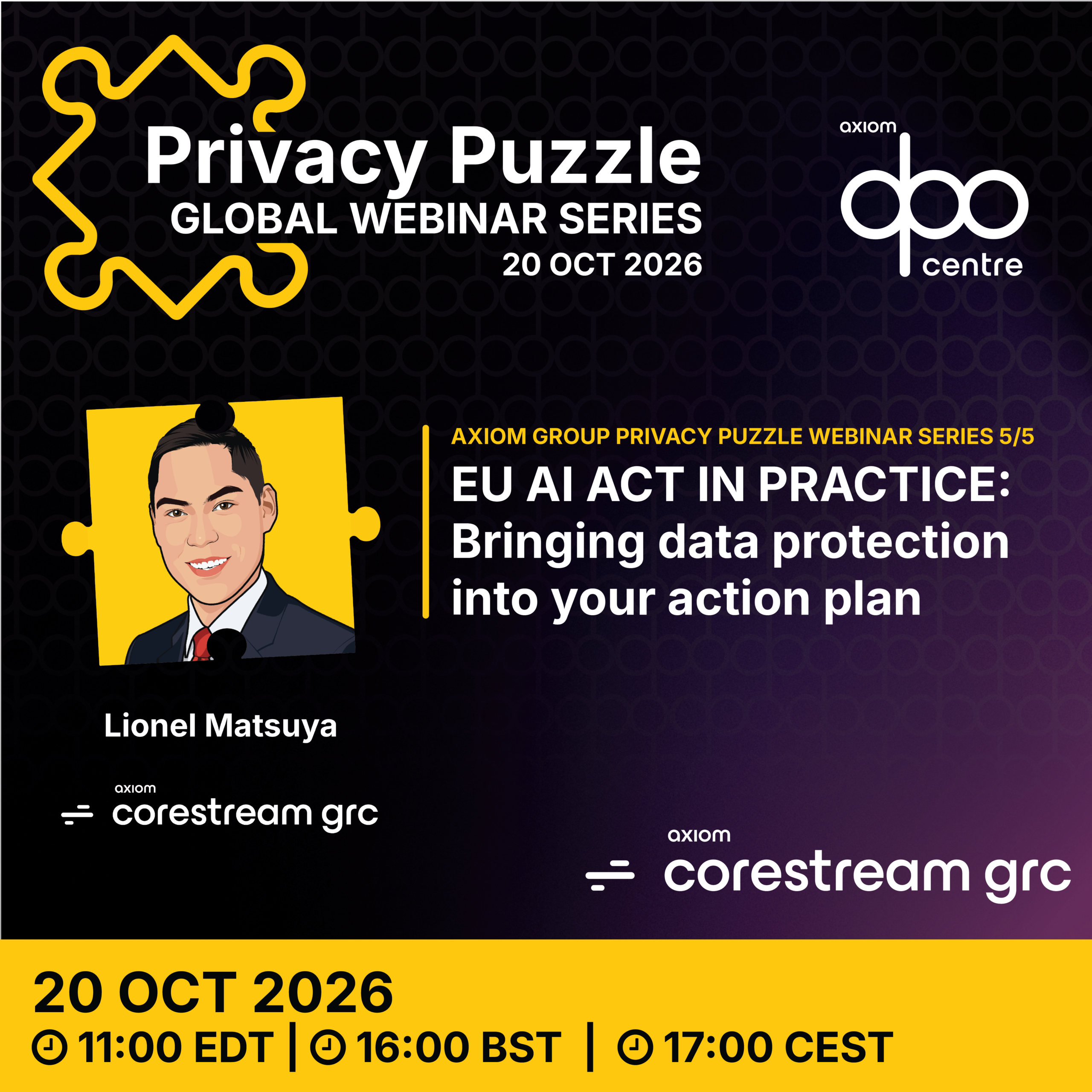
EU AI Act in practice: bringing data protection into your action plan
Most organizations are treating the EU AI Act as a standalone compliance project. That’s a mistake. If your AI systems process personal data, AI compliance doesn’t sit in its own silo. Treating these responsibilities separately risks duplicated work, inconsistent controls and gaps in accountability. Data protection, governance, risk management, audit and compliance all have a…
Frequently asked questions
A conflict of interest is any situation where personal relationships, financial interests, external roles, or other activities could influence, or appear to influence, an individual’s professional judgement. These conflicts aren’t always intentional, which is why transparent disclosure is essential.
Disclosures help your organization identify potential risks early, protect its reputation, and uphold regulatory obligations. Providing this information is not about preventing activities but ensuring they are managed responsibly and transparently.
Your disclosure will be reviewed to determine whether any mitigation is needed, such as recusal from certain decisions, enhanced oversight, or documentation for audit purposes. Most conflicts can be effectively managed when identified early, and disclosure helps ensure fairness and integrity.
You should update your disclosure whenever your circumstances change, such as new financial interests, new employment roles, or evolving family relationships that could impact your role. Regular annual reviews are typically required, but timely updates help prevent minor issues from becoming compliance risks.