
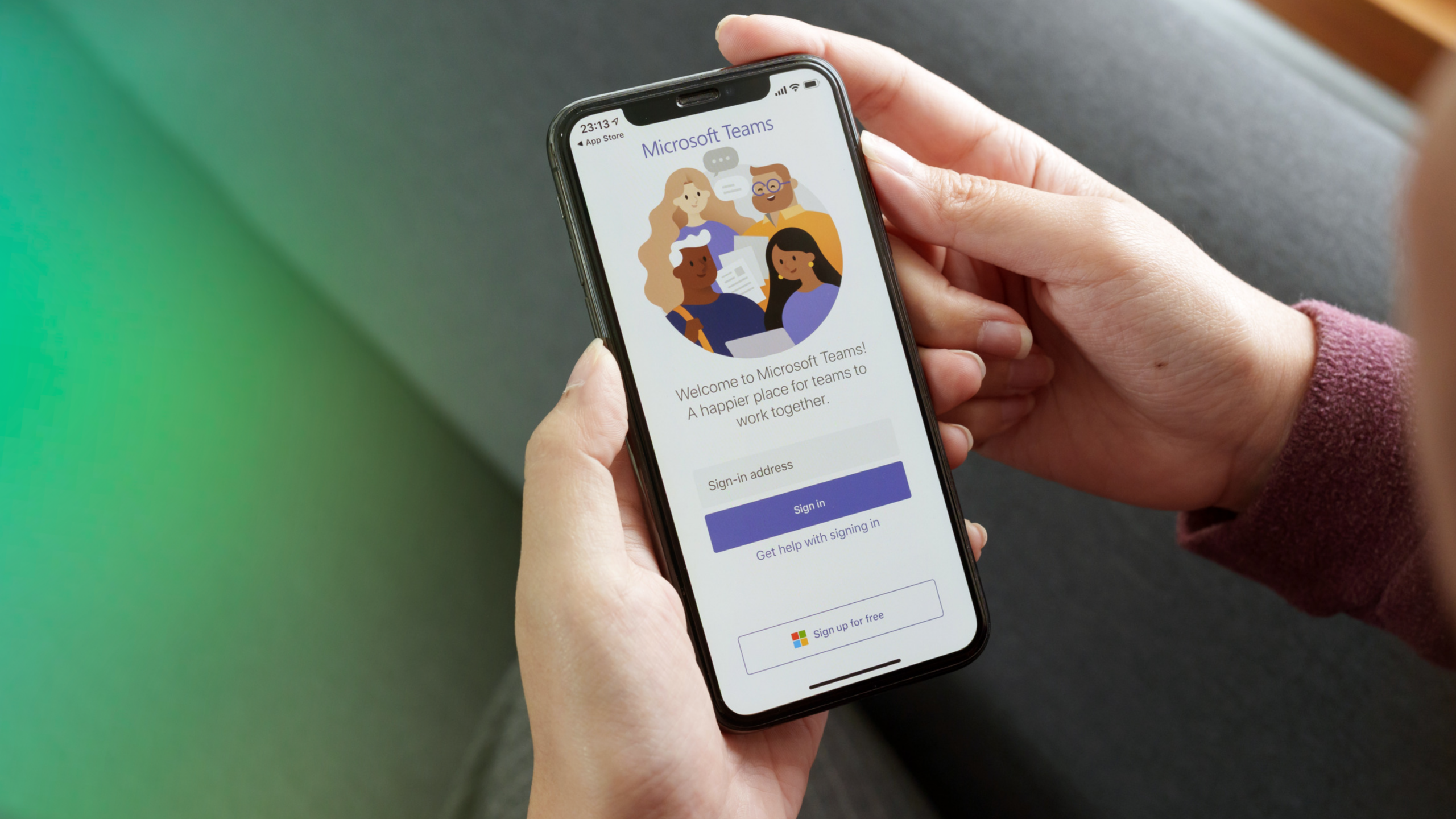
Outlook, Teams and Copilot went dark in at least 70 countries. Here’s what the Microsoft 365 outage teaches GRC teams about concentration risk and having a real plan B.
Key takeaways from the Microsoft 365 outage
- On 12 and 13 November 2026, a Microsoft 365 outage cut off Outlook, Teams and Copilot in at least 70 countries for almost a full day.
- Hospitals, courts, schools, governments and businesses around the world lost their default communication channel and fell back on websites, social media and the phone.
- While most organizations recognize Microsoft as a single vendor, far fewer have planned for losing email, calendars, files and chat at the same time.
- Regulatory requirements and oversight of Microsoft under DORA and the UK’s critical third parties regime don’t transfer accountability for your own resilience.
- Risk teams should map their Microsoft 365 dependencies, agree a sanctioned fallback channel and rehearse a day-long outage before the next one.
Introduction: an email-free Friday exposes a business resilience risk
On Friday 13 November, Westminster Magistrates’ Court in London was struggling. “Judges have been unable to access systems,” one member of court staff told the BBC. The prosecution couldn’t send papers through, and staff couldn’t get pre-sentence reports.
Across the Atlantic, New Jersey-based Atlantic Health quickly found the problems reached far beyond email:
“It impacts patient care, supply chain, and several other services,”
Sunil Dadlani, Executive Vice President and Chief Information Officer
ChristianaCare in Delaware lost email, along with faxes and pagers that rely on email addresses. It asked patients with urgent needs to call their practice directly.
Back in England, East Suffolk and North Essex NHS Foundation Trust used Facebook to tell patients to phone, or use its MyChart patient portal, for urgent queries. Schools asked parents to phone rather than email.
Each faced the same problem. Their default channel was the thing that had failed. So they fell back on what was left: a notice on the website, a post on social media and a request to pick up the phone.
Those channels can only broadcast a message to whoever happens to look. They can’t replace the targeted, two-way traffic that email carries every working day. For many organizations, this wasn’t one tool failing. It was their entire communications channel, supplied by a single vendor.
What happened in the 2026 Microsoft 365 outage
Microsoft first acknowledged problems for users in the Americas on the evening of 12 November, UK time, and soon warned that customers anywhere could be affected. Outlook, Teams and Copilot were inaccessible in at least 70 countries, and disruption lasted almost 24 hours before broad recovery. Microsoft apologized and said the incident was introduced by “an issue during an earlier network capacity upgrade” that surfaced after a recent network change. It was not a cyberattack.
But recovery wasn’t straightforward. Some servers Microsoft restored became unresponsive again once traffic reached them.
Healthcare felt it on both sides of the Atlantic. NHS hospitals, GP surgeries and ambulance services lost email, and some staff turned to paper records. University of Iowa Health Care lost email and voicemail across all its campuses, and Unity Health Toronto warned that patients and doctors might struggle to reach each other.
Court services and city governments in the US, French public bodies and Germany’s Deutsche Bahn all reported disruption and a South African winemaker said communication with exporters had ground to a halt. Even the Bank of England and the UK’s Financial Conduct Authority were affected.
The UK’s cyber security minister, Liz Lloyd, said the outage had mainly hit back-office functions such as email and messaging, with limited reports of impact on frontline services. But that is exactly the point: back-office email is what coordinates everything else.
Nor was this a one-off. Microsoft 365 suffered a roughly 10-hour outage in January 2026 and a major Exchange Online outage on 31 August. These are not once-in-a-lifetime, black swan events.

One vendor, one product, one point of failure: the concentration risk in your third-party risk management framework
Organizations know that Outlook, Teams, SharePoint and OneDrive all come from Microsoft. Many buy them as one product, Microsoft 365, because it’s simpler, cheaper and very reliable. As Reuters’ Breakingviews notes, Microsoft reported 99.994% availability for the suite in its second quarter.
But, while geopolitical tensions and cyberattacks are causing organizations to consider the risk of losing critical systems, the widespread disruption of this outage suggests most organizations haven’t yet found a solution for such exceedingly rare disruptions of such critical systems.
The problem isn’t awareness. It’s that few organizations have worked through the consequences of running internal and external communications, collaboration, files, calendar-driven workflows and often their security tooling on a single platform. When it fails, it takes out the default channel and the channel you’d use to say the default has failed.
That is concentration risk, and it belongs in your third-party risk management framework. It’s also growing. Splunk and Oxford Economics surveyed 2,000 executives at Global 2000 companies and found that the perceived frequency of cybersecurity-related downtime caused by SaaS and other third-party applications has nearly tripled since 2024. Some 56% of security leaders now experience it often or very often.
Microsoft’s own research makes the same case. The 2026 Microsoft Digital Defense Report argues that resilience by design starts from the assumption that failures will occur, and that “dependencies matter as much as adversaries.”
Regulators are paying attention. Microsoft Ireland Operations is a designated critical ICT third-party provider under the EU’s Digital Operational Resilience Act (DORA) and, since 13 July 2026, a critical third party under the UK regime. But this does not diminish the responsibilities of regulated firms.
As we said when Norway’s BankID failed in September, oversight of the provider doesn’t replace your own plan.
How should you plan for a Microsoft 365 or similar third-party outage?
Assume any platform you depend on will fail, and that it will be down for a day. Map which important services rely on it, agree a sanctioned fallback channel that runs on something else, keep offline copies of key plans and contacts, and rehearse the scenario. A continuity plan stored on the platform that’s down won’t help anyone.
The cost of not planning is real. The same Splunk research puts the average cost of downtime at $15,000 a minute. As Kamal Hathi, SVP and GM at Splunk, says:
“Downtime is inevitable; prolonged disruption is not.”
Kamal Hathi, SVP and GM, Splunk
And allowing users to improvise carries its own risk. Cyber security expert Ken Munro warned on the BBC that people switching to WhatsApp and similar apps during the outage could end up sharing sensitive data on less secure platforms, and that scammers would exploit the confusion with fake support messages. If the plan B isn’t agreed in advance, staff will invent one, and it may become a data protection problem of its own.
Scenario planning finds these gaps before an outage does. Microsoft’s report calls regular tabletop exercises and after-action reviews essential, and our guide to pre-mortems sets out one practical method: assume the disruption has already happened, then work backwards to find out why it hurt. It needn’t be elaborate. As Paul Cadwallader, GRC Strategy Director at CoreStream GRC, puts it:
“Start the conversation. It can be as simple as a sketch on a whiteboard – but it unlocks hearts and minds.”
“The risk isn’t in choosing Microsoft, or any other large vendor, the risk lies in assuming it can’t fail. An incident is the crystallization of a risk. If losing email for a day would stop you delivering your most important services, that risk deserves a named owner, a tested plan and a place on the board’s agenda.”
Paul Cadwallader, GRC Strategy Director, CoreStream GRC
What GRC teams should do now to strengthen business resilience
Map what really runs on Microsoft 365
List the important services and processes that depend on it, including the less obvious ones: faxes, pagers and voicemail routed through email, approvals, alerts, sign-in and AI assistants. Give each dependency a named owner. ChristianaCare’s pagers show how far the reach can extend.
Set an impact tolerance for losing it
Decide how long each important service can run without email, calendars and Teams, and link that decision to your risk appetite and tolerance. Then test your plans against an outage of 24 to 48 hours, not 2.
Agree a sanctioned plan B channel
Choose a fallback that doesn’t depend on Microsoft 365, whether a phone tree, an approved messaging tool or a standby email service, and set it up before you need it. Keep contact details current for the staff, customers or patients you’d need to reach, and tell staff which channels not to use.
Keep the plan where you can reach it
Hold offline or printed copies of your business continuity plan, key contacts and pre-written messages for your website and social channels. Prepare a staff warning about fake “outage support” messages so it goes out within the first hour.
Rehearse, then record
Run a tabletop exercise built on one scenario: “Microsoft 365 [or other critical vendor service] is unavailable until tomorrow afternoon.” After any real outage, log it as an incident, record what actually broke and review your contract position. A UK disputes lawyer told the BBC that compensation claims would face hurdles, depending on contract terms and proof of loss.
Conclusion: recognize the risk in critical, single-vendor services
“There is no excuse for not being prepared.”
The article cited the attack on French supermarket fridges as another wake-up call, one we examined last month.
Microsoft 365 will go down again, and so will other platforms we quietly assume are fail-proof. The organizations that cope best will be the ones that knew what depended on it, agreed how they’d communicate without it, and had tried it before the day came.
If you’d like help building that kind of business resilience strategy, book a free, one-hour workshop with our strategy experts and your risk and compliance team to explore how a value-based GRC approach could work for your organization:
Frequently asked questions about the Microsoft 365 outage
Microsoft said the outage was a technical issue, not a cyberattack. It was introduced during an earlier network capacity upgrade and surfaced after a recent network change. Servers became unavailable, putting pressure on the remaining infrastructure, and recovery took almost 24 hours. Microsoft has said it will publish a full post-incident report once its review is complete.
For most organizations, yes. Email, calendars, chat, files and often security tools run on the same platform, so a single failure can remove several critical capabilities at once. That doesn’t mean you should stop using it. It means you should treat it as a critical third party, map what depends on it and plan for its absence.
No. Both regimes give regulators direct oversight of critical providers such as Microsoft, but the firms that rely on them remain accountable for their own operational resilience. If you’re an EU financial entity under DORA, or a UK regulated firm, you still need to show you can keep important services running when a critical provider fails.
A business resilience plan should list the services that depend on Microsoft 365, set how long each can run without it and name a sanctioned fallback channel with current contact details. It should also hold offline copies of key plans and messages and include guidance on phishing. Rehearse it at least once a year with a realistic, day-long scenario.