
CoreStream GRC for Third Party Risk Management
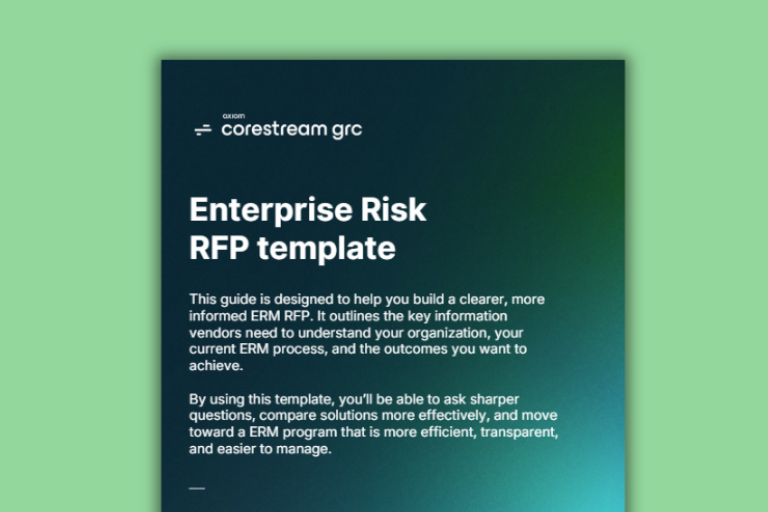
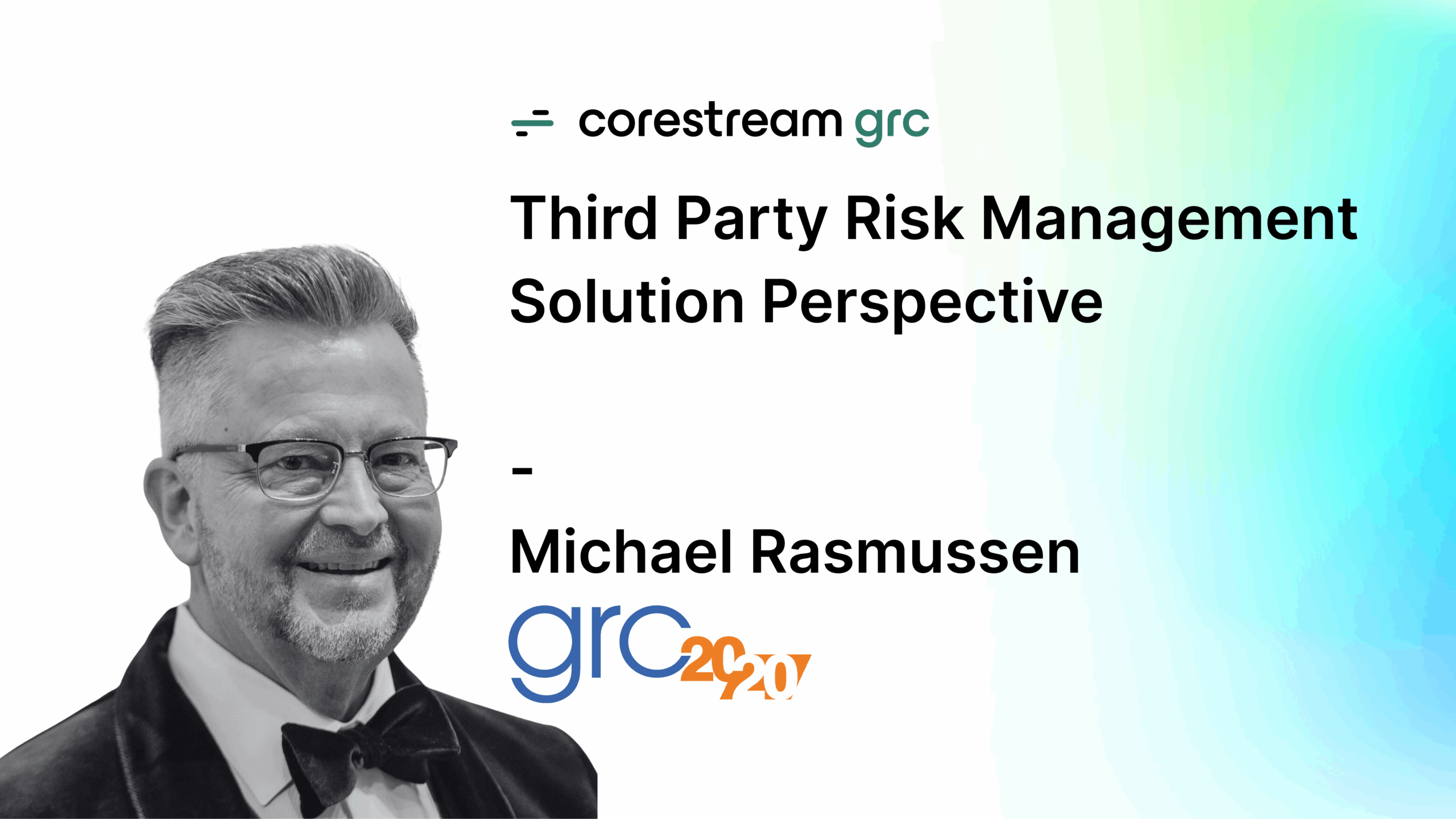
GRC pioneer Michael Rasmussen, widely recognized as the original Forrester analyst who coined the term “GRC”, recently reviewed our third-party risk management (TPRM) solution. As part of his evaluation, he spoke directly with several of our TPRM clients to gather firsthand feedback on their experiences. Based on these insights, he developed a comprehensive solution perspective, which you can download here: https://grc2020.com/product/corestream-grc-for-tprm/
Or check out a sneak preview here:
Enabling Third-Party Risk Management Across the Lifecycle
About CoreStream GRC
CoreStream GRC is a solution that GRC 20/20 has researched, evaluated, and reviewed with organizations that are using it in distributed, dynamic, and disrupted business environments across industries and around the world.
CoreStream GRC is an agile GRC management platform that can be used to manage a range of risk and compliance processes and other business processes, but has seen particular success in addressing third-party risk management.
They deliver a no-code solution with a modern information architecture and intuitive interface. It truly is a next-generation business management platform with a governance, risk management, and compliance focus.
CoreStream GRC’s third-party risk management solution
CoreStream GRC provides organizations with out-of-the-box third-party risk capabilities and the ability to configure and adapt the solutions to support the needs of a range of other business processes.
GRC 20/20 has evaluated the features and capabilities of CoreStream GRC and finds that it delivers a flexible, intuitive, and engaging solution for third-party risk management.
It is used to collect, organize, link, report, and analyze data with increased control, collaboration, transparency, and accountability.
GRC 20/20’s evaluation, research, and interactions with CoreStream GRC clients have determined the following:

BEFORE CORESTREAM GRC: CoreStream GRC clients typically replace fragmented, manual approaches to third-party risk management that rely on spreadsheets, documents, emails, and legacy internal systems. These methods were time-consuming, prone to errors, and difficult to scale, particularly when aggregating and reporting across thousands of records.
Some organizations had experimented with larger GRC platforms but found them too costly, rigid, and complex, with customizations frequently breaking during upgrades. Clients emphasized frustration with inefficiencies, missed risks, and a lack of visibility prior to adopting CoreStream GRC.
WHY CORESTREAM GRC: Organizations select CoreStream GRC for its agility, configurability, and ease of use, providing a single, integrated platform for managing third-party risk workflows.
Clients value the platform’s adaptability to regional hosting requirements (such as in-kingdom data hosting in the Middle East), strong integration capabilities with systems like SAP Ariba, Exiger, Threat.Digital, BlackKite and other data sources, and its ability to rapidly configure solutions to align with business and regulatory needs.
The decision is also supported by CoreStream GRC’s lower total cost of ownership compared to larger competitors and the vendor’s reputation for responsiveness, customer focus, and collaborative engagement.
HOW CORESTREAM GRC IS USED: CoreStream GRC supports a wide range of TPRM use cases, including:
- Procurement intake
- Due diligence
- Watchlist screenings
- Export controls
- Trade compliance
- Employment background checks.
Clients deploy the solution both internally for workflow automation (e.g., compliance risk assessments, intake processes) and externally as the backbone for managed TPRM services.
The no-code environment enables rapid development of tailored applications that can evolve alongside business needs.
WHERE CORESTREAM GRC HAS EXCELLED: Clients consistently highlight CoreStream GRC’s flexibility, speed of delivery, and ability to integrate with other enterprise systems. Organizations benefit from a single source of truth, automated screening processes, and improved visibility into third-party risk data.
These capabilities reduce errors, eliminate redundancy, and streamline reporting through intuitive dashboards. CoreStream GRC’s ease of implementation and collaborative vendor relationship are noted as differentiators, with clients describing the solution as responsive, adaptable, and continuously improving.
While some acknowledge CoreStream GRC’s smaller size compared to market giants, they emphasize its strong execution, innovation roadmap, and effectiveness in meeting complex third-party risk requirements.
Want to read more? Download the full report here.
Or head over to the client reference section of the report here.
CoreStream GRC was also recognized by Michael Rasmussen in 2025, for the Innovator Award for Enterprise GRC architecture, learn more here.
About Michael Rasmussen
Michael Rasmussen is an internationally recognized thought leader and pioneer in governance, risk management, and compliance (GRC). With over 30 years of experience, he has extensive expertise in enterprise GRC strategy and processes supported by robust information and technology architectures. Known as the ‘Father of GRC’, Michael was the first to define and model the GRC market in February 2002 while at Forrester, setting the foundation for the modern understanding of GRC.
Frequently Asked Questions
Michael Rasmussen concluded that CoreStream GRC delivers a flexible, intuitive, and next-generation approach to third-party risk management. His research found that the CoreStream GRC platform offers agility, configurability, and speed of implementation unmatched by larger, more rigid competitors—providing clients with measurable efficiency gains and lower total cost of ownership.
Organizations select CoreStream GRC for its no-code configurability, integration strength, and client-first delivery model. Financial, energy, and public-sector clients value its ability to align rapidly with internal workflows, regional hosting requirements, and evolving regulatory frameworks—while maintaining a modern, user-friendly experience.
CoreStream GRC replaces fragmented, manual TPRM practices such as spreadsheets and email-based tracking with a centralised, automated platform. It provides real-time visibility into supplier risks, supports automated due diligence and watchlist screening, and enables rapid, consistent reporting through intuitive dashboards and configurable workflows.
Unlike traditional enterprise GRC platforms, CoreStream GRC offers a no-code architecture that allows rapid configuration without costly development or upgrade delays. Its smaller, client-focused structure enables responsive support, faster implementations, and continuous platform innovation tailored to real-world GRC challenges.
According to Michael Rasmussen, CoreStream GRC’s strengths include flexibility, integration, and speed of delivery. Clients consistently praise the platform’s ease of use, collaborative vendor relationship, and ability to evolve alongside business needs—making it a strong alternative to larger, slower GRC systems.